A blog from Ruth Pitter, who we’ve had the pleasure of working with as a facilitator for the last couple of rounds.
In the current political and social climate where communities are often set up to compete against each other, and pitted towards holding inflexible viewpoints on each other, it has been extremely encouraging working with Bristol Redistro to support the inclusive systems they utilise to support community action and social justice in Bristol.
The Bristol Redistro process of working with grassroots organisations to collectively determine among themselves how they share pots of funding is a system which many funders can learn from. It moves away from the patriarchal methods where funders with limited connections to the groups they’re funding ultimately make the decision as to who gets what; their ‘safe’ funding decisions mean that equity and fairness fall down the list of funding criteria. Bristol Redistro recognises that this leaves many small grassroots groups floundering in the competitive funding lanes.
Through the Bristol Redistro process it’s been uplifting working with a funding panel of community activists totally committed to the community sector and therefore fully invested in ascertaining among themselves the groups to shortlist and select for the Bristol Redistro funding pot. Community activists engaged in the sector themselves care about and want to ensure that the funding reaches grassroots groups delivering excellent services. Services that may not always be considered appealing by mainstream funders, such as groups campaigning on behalf of local people for better services; or challenging agencies on issues related to inequality and discrimination; groups encouraging celebration of their
communities; or achieving alternative outcomes to increase well-being.
Meeting with and facilitating the funding shortlisting panel of peer groups in May I witnessed the diligence they paid to the short listing to ensure fairness and equity whilst being willing to take bold decisions. It was evidence that entrusting funding decisions to communities themselves, where peer activists are key components of the process, can be most effective. The panel found having to say ‘not this time’ to some groups particularly difficult because they were fully aware of all that groups are doing in such challenging times and therefore were keen to give feedback that would enthuse them. It was a hard task determining the 21 groups that would be invited to the Bristol Redistro Community Funding
Day.
Following the short listing process, and due to a very generous contribution from an anonymous donor it meant that all shortlisted groups were able to equally benefit from the funds available.
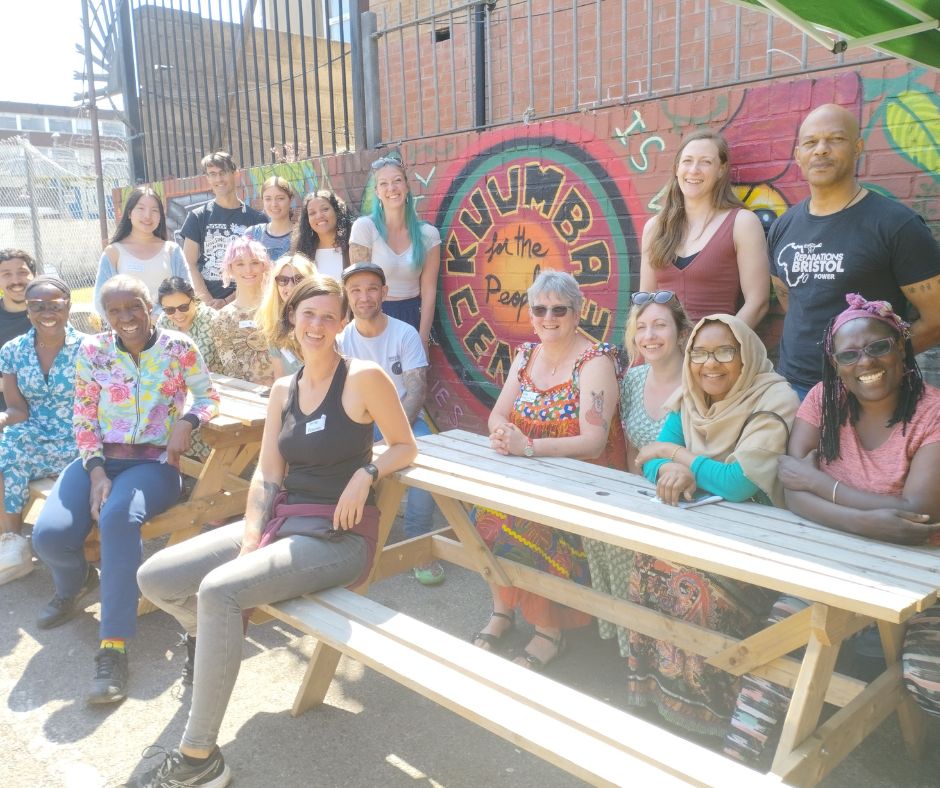
The Bristol Redistro Community Funding Day in June signifies Bristol Redistro’s commitment to build community among the groups they fund and to put social justice and equity at the core. The aim of the day was for funded groups to celebrate all the great work they do; to learn from each other; to seek ways to collaborate; and to be emboldened within the network of Bristol Redistro funded groups.
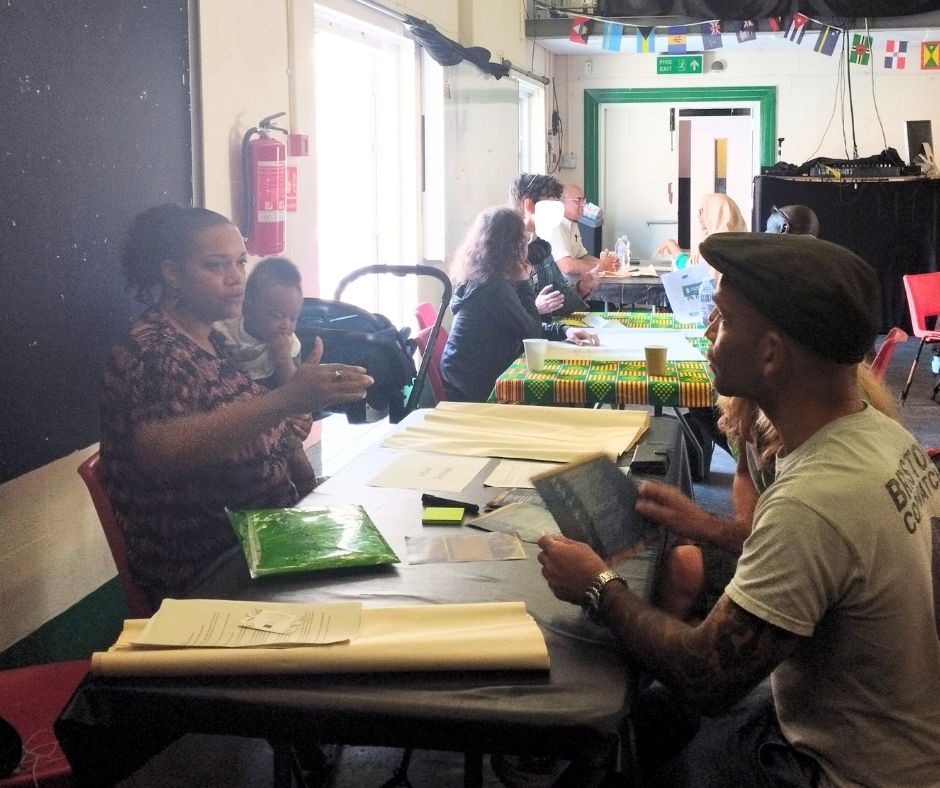
The majority of the 21 funded groups this year were able to attend on the day. A range of fledging and more established grassroots groups all achieving outstanding work. Most useful during the session was a carousel activity which enabled groups to focus on how they could best promote themselves to the wider world; ascertain aspects of their work that best demonstrated their services; to be open about challenges they faced; to make asks for help; and to offer ideas and suggestions to each other. The day definitely brought awareness of the shared commitment and the dedicated activities of all those present, and how many were stretching minimal resources to maximise efficient and quality services.
Individuals who attended were lead activists most of who were running their organisation, and the majority doing so in a voluntary capacity – in some cases providing services that should be, or were previously the responsibilities of public services.
The event allowed the development of strong connections through knowledge and skills sharing; discussing experiences with each other and exploring innovative ideas and possible opportunities for each of their organisations, also to acknowledge their positive impact within the sector and among the communities they served.
Bringing groups funded together to connect and recognise each other as valuable peers builds powerful collectives. Comments from those who attended the Community Day:
“I came along unsure as to what to expect. I really loved the day. I appreciated meeting the range of other groups and the opportunity to share ideas. I’m so glad I came.”
“Thanks for funding us and for bringing us together with other funded groups. I learnt a lot on the day, got some really good ideas from others and had fun too.”
“All the (funded) groups are doing amazing work. It’s a privileged to be part of this cohort of fantastic groups.”
“I really got a lot from the day, and was able to practice my elevator pitch so we can define what we do for future funders.”
“I didn’t realise there was so much amazing organisations in Bristol. I’m glad you’ve all been funded because having heard what people are doing, you all definitely deserve to be.”
The model of building and fostering a sense of belonging among the Bristol Redistro community of funded groups encourages peers in the collective to step forward and volunteer as panel members for future Bristol Redistro funding rounds. Some have already offered to do this for future Bristol Redistro funding rounds having experienced the benefit of peer support from being part of the process.
Bristol Redistro is a refreshing reminder that when we emerge boldly from the noise and fog of distracting or negative narratives we can collectively achieve things differently, more effectively and better.
Ruth Pitter – facilitator
July 2023

 Bristol Redistro