We’ve just submitted our annual accounts which includes a sum up of our activities in 2025:
Summary
This year, we wanted to trial new funding models and explore more ways to be adaptive and proactive in supporting grassroots groups in Bristol.
We also wanted to find new ways to support and involve groups who were unsuccessful in securing funding and tried to make the application process a more meaningful experience, regardless of the outcome.
In addition we spent time doing outreach to engage with parts of Bristol we have not reached before. This included a particular focus on North and South Bristol.
Community Response Fund
In April, we launched a Community Response Fund to provide small grants to groups and/or activists responding to emerging events or situations. While our main fund supports groups with day to day activities, we saw a gap in funding for grassroots groups carrying out more ad hoc organising.
Our aim was to get money to communities quickly and help them to take action in response to emergencies or times of crisis. The fund can support a range of activities such as room hire, printing and access costs. Groups must meet our usual criteria to apply but the online application form is shorter and decisions are approved quickly by Redisto organisers. The grant is currently £150 although this may be reviewed due to the rise in living costs.
Since launching the fund, we have supported three groups and organisers responding to emerging events in their community, including Bristol Crips, an emergency meeting addressing racism following a racist assault on a child and the Kurdish Solidarity Group.
Bristol Solidarity Collective
This year has been really about exploring different ways to fund grassroots groups. In May we piloted a six month trial with six grassroots groups we have previously supported to explore a different funding model. As referenced in our report last year, the shortlisting process is becoming more difficult as the number of applications increases. The administrative burden is high and the organisers find it hard to find to process applications quickly. Scoring and decision making can also have their challenges as it can take a long time and reviewers often find it difficult to say no to applicants.
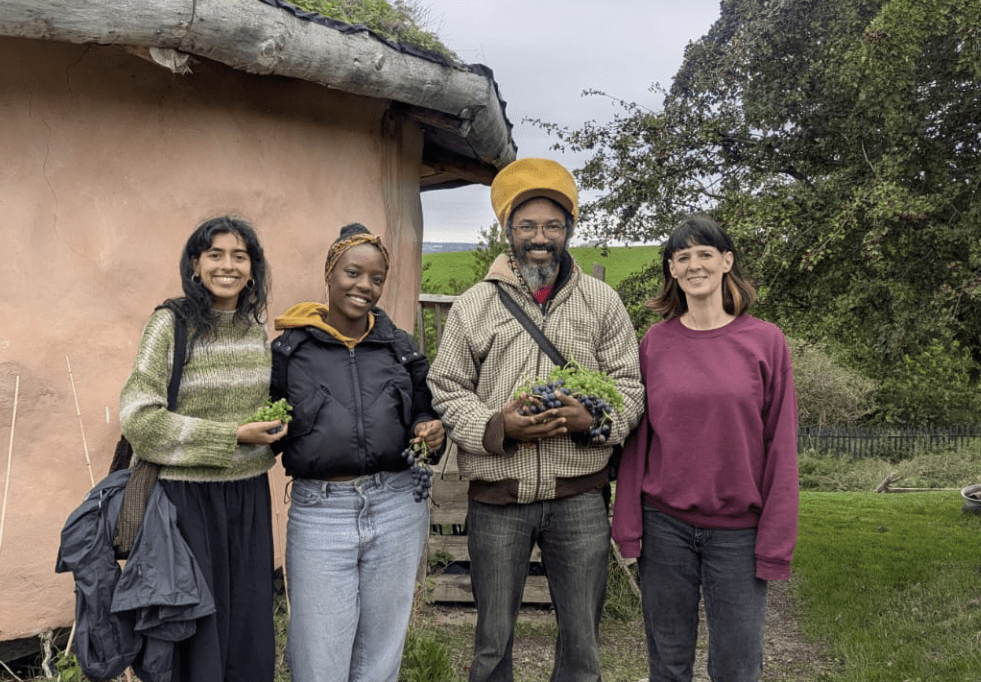
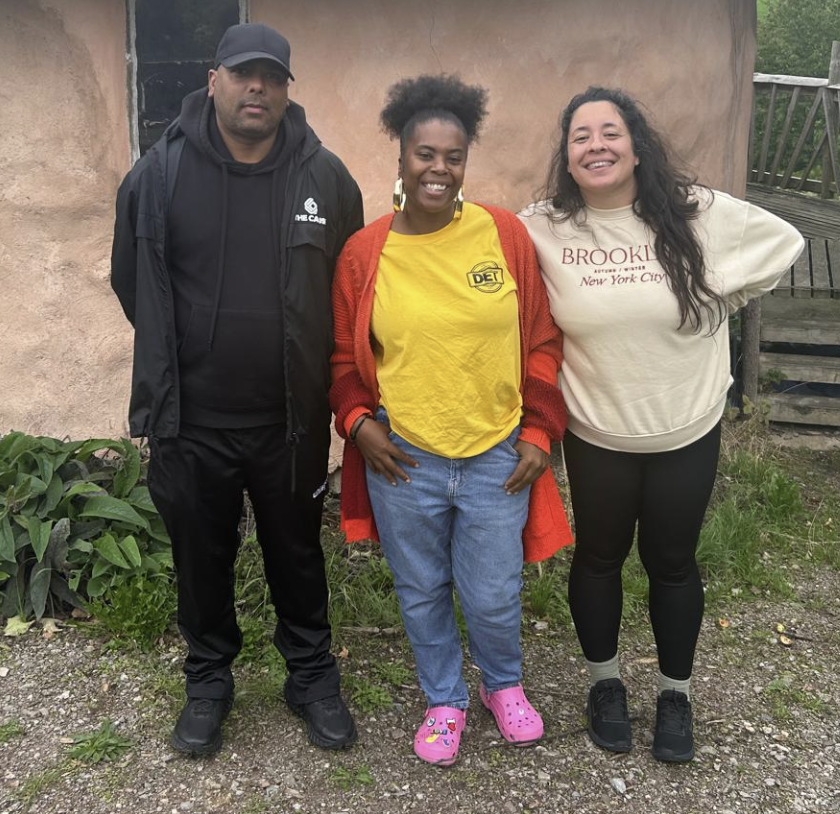
We wanted to trial an approach that would allow groups to support one another, share resources and still play an active role in funding decisions. Additionally we wanted to create opportunities for stronger connections between groups and hoped that they could help each other access resources (such as space or equipment) rather than seek funding. The trial involved six groups working across a range of issues. We allocated a shared pot of funding for the groups to draw down from as needed. Groups submitted simple requests (instead of an application), which were then quickly authorised via WhatsApp by other groups members. These groups, who chose to call themselves the Redistro Solidarity Collective, are:
- Bristol Black History Tours
- Dandelion
- The Cause
- We Are More
- DET Entertainment
- Abolitionist Healing Collective
Outreach
Over the summer we focused on spreading the word in areas where we hadn’t received many applications in the past, including North and South Bristol while also working to find more people who can offer support to our groups.
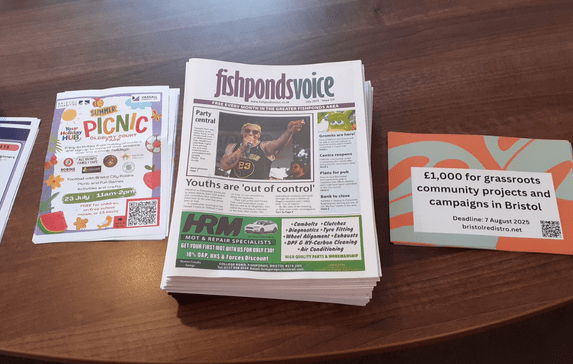
We took applicant leaflets to 45 community centres and libraries across Bristol which included Avonmouth, Lawrence Weston, Southmead, Brentry, Easton, St Paul’s, Brislington, Hillfields, Speedwell, Fishponds, Knowle West, Hartcliffe, Withywood and Whitchurch.
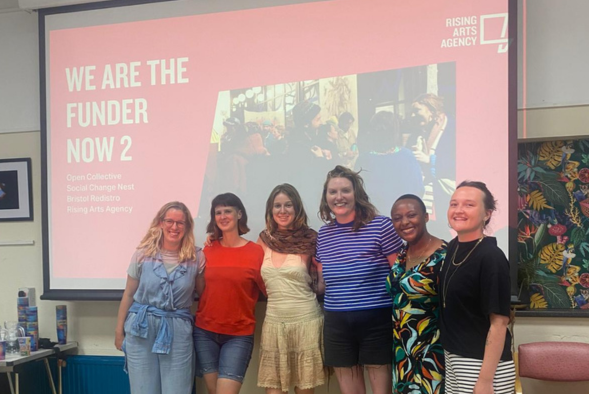
We also organised “We Are the Funder Now” with Social Change Nest, Open Collective and Rising Arts, offering advice on fundraising for grassroots groups and giving applicants the opportunity to chat with us before making an application.
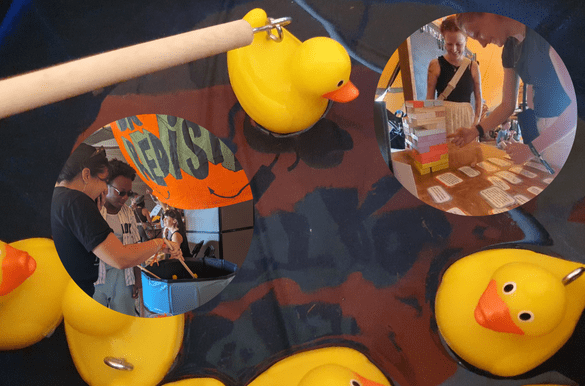
In addition, we attended the Unconference for community activists held in Ashton Vale and took our stall to events including Inns Court Summer Festival, Knowle West Community Fun Day, Hartcliffe Summer Fair, Bristol Transformed, St Werburgh’s Community Centre open day, Forwards Festival, Trinity Centre Community Celebration Day, the Radical Roasters arts trail event and Rockaway Park arts weekend.
Outreach: Bristol Unpacked
In early December, we were invited to talk about wealth redistribution on Bristol Unpacked, a podcast produced by the Bristol Cable.
Bristol Redistro was established in 2019 primarily as a wealth redistribution group with the aim of transferring resources from those who have it, to those that don’t. In recent years, the demands of fundraising and managing applications have meant this core aspect of our work has taken a back seat. Looking ahead to 2026 we plan to refocus this priority, potentially through workshops and by allocating a portion of our funding to support this strand of our work.
Applications
Round 7 opened in August 2025 and we received the highest amount of applications – 71 in total. Of these, 58 were eligible and 43 were selected for funding by our 30 community scorers. One selected group later secured funding elsewhere and generously turned down our grant, allowing those funds to support other groups instead.
Round 7 fundraising
After the scorers selected the 43 groups, our goal was to raise a total of £42,850 to support them. By 20th October, we had raised £34,966.35 leaving £7,883.65 to fundraise before the celebration event on 15th November. This gave us just under a month to reach our fundraising target. We successfully reached this goal on 6th November.
Donors
All donations from 2025 came from individuals with the exception of Headfirst who donated £13,855 over the course of the year.
Every donation we receive makes a difference. Between 1st January and 31st December, 20 people signed up to make monthly donations on Open Collective. In addition, we received five regular donations directly into the Bristol Redistro bank account. These regular donations ranged from £5 to £100 per month.
We also received a number larger individual donations, with 15 people contributing more than £1,000. We received two large individual donations of £10,000 one in May, and one which was received in late November and will be used for activities in 2026. Our second largest donation from an individual was £6,000 (£3,000 of which was allocated to the Bristol Solidarity Collective).
Sharing Day
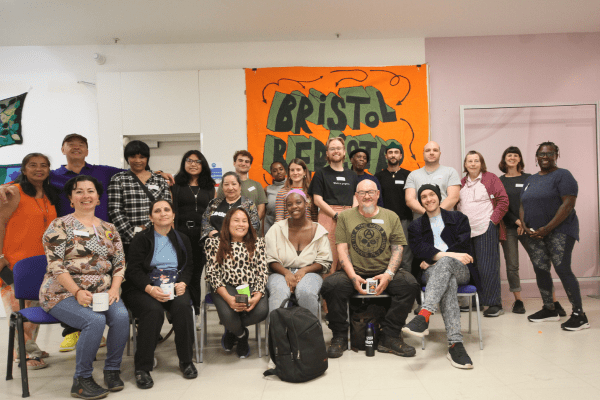
After the application deadline, we held our very first applicant Sharing Day. We know that the funding process can often feel competitive, isolating and demoralising, particularly for unsuccessful applicants. We try to do funding differently and want all groups to benefit from the process even if their application is not successful. The Sharing Day, held at Sparks, was organised to bring applicants together to build relationships and exchange skills/resources.
30 people from over 20 different groups attended. Attendees also completed a form outlining both the needs of the group and the support or resources they could offer others. Many attendees said they were grateful for the opportunity to come together.
Feedback from Sharing Day
“Thanks for the day as it was really appreciated & really helped with the thinking process. It gave me personally more confidence that we are doing the right thing”.
“Thank you all for getting us together. This time round it feels like a real connection and by having this group we can share talk collaborate promote each other.. What Redistro do is really important for Bristol Artists and organisations that are always working on a breadline income or those just starting up and need a push. That little extra help from you guys does go along way thank you so much”.
Scoring and changes to the Decision Making Process
In addition to the Sharing Day, we made a few changes to the decision making process for Round 7. This year the applicants themselves were given the opportunity to participate in decision making alongside previously funded groups. We felt that asking current applicants to read and score applications might mean we would have a larger pool of scorers and reduce the burden on the panel, while also providing applicants a useful insight into the way Redistro works.
We also wanted to make sure that groups receiving money feel like they can manage funds in a way that works for them. As a result, we changed the options for how groups can choose to receive their grants. Groups using a personal bank account can now choose to receive funding in a lump sum or installments. We also offered support with setting up a dedicated bank account or an Open Collective account as an alternative to a personal bank account.
30 people took part in the scoring process. While decision makers at many funders are overwhelmingly white (99%), predominantly male (around two thirds) and nearly 60% over the age of 65, we were proud to buck the trend. Around 60% of our decision makers were from racially minoritised communities, over 70% were women and non-binary people and participants ranged in age from 19 to 73.
As a thank you for their contribution, each scorer was given £50 for scoring. The total amount paid to the panel this round was £1,450.
Meeting our Round 7 Groups
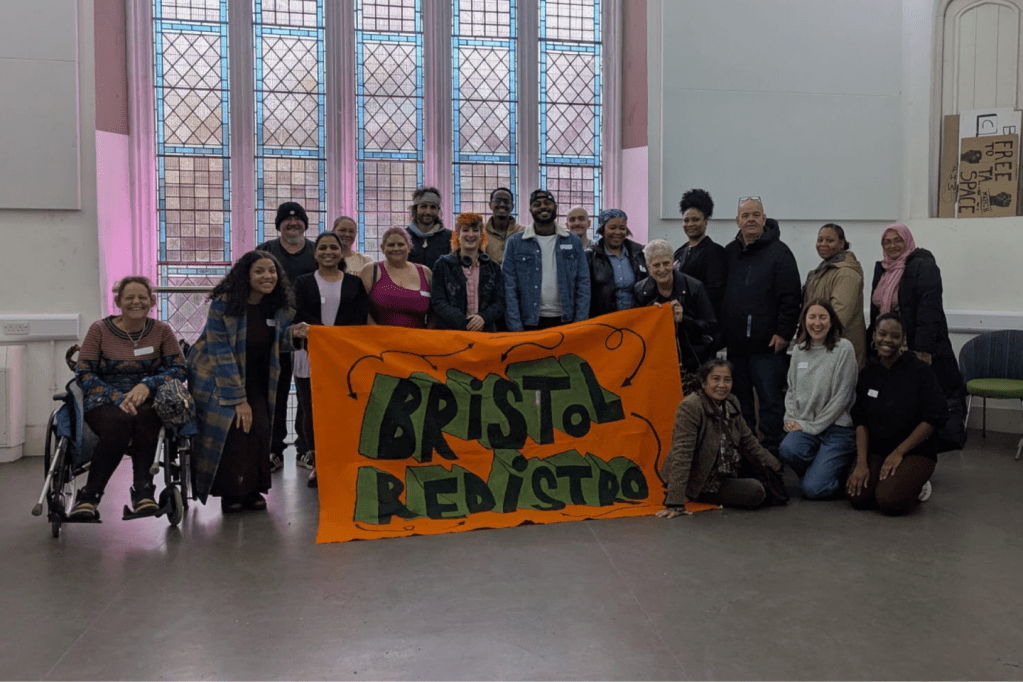
On 15 November 2025 we brought together our Round 7 funded groups at the Trinity Centre to celebrate their work and build connections. Our facilitator, Tidrah, created a warm and supportive space where people could get to know each other and share their work. Conversations focused on the issues that groups are trying to tackle and the inequalities underlying those efforts. We shared a delicious Sudanese lunch before spending the afternoon dreaming about a world where our work was ‘finished’. Some groups reflected that their work wouldn’t really ‘finish’ in a world without inequality, but it would look different. At the end, we gathered and shared these dreams, ending the day feeling inspired, uplifted and connected.
Some comments about the day:
“Thank you to everyone for a wonderful get together today – so good to hear about so many amazing community initiatives.”
“Thank you so much to Bristol Redistro organisers for today. That was wonderful. It was a true gift to meet you all and get to know your networks.”
“It was really nice to meet you and to talk about the issues, the solutions we can implement, and the impact of our work. Thank you to Bristol Redistro for organising this. I look forward to what the future holds.”
Learning and Reflections
We are proud of what we have achieved this year. We’ve explored new models and launched a Community Fund to help groups respond to crises.
We felt that our efforts at outreach were largely successful as reflected in the 71 applications we received from groups based across the city of Bristol.
We felt the changes to the application process were positive. Expanding the pool of scorers to include applicants themselves, reduced the burden on our previous applicants and brought more people into the decision making process. There is often a power dynamic within traditional funding models where decision makers are typically white, male, middle class and not directly affected by the issues they are assessing. By involving a wider and more diverse range of people in the process, we think it felt less exclusive and handed control over to the wider Redistro community.
When reviewing applications, we found that a number of applications did not fully meet our criteria. Next year, we plan to refine our criteria to make it clearer that the fund is intended to support working class communities.
We’re a small group of volunteers, and often the administrative workload involved with processing a lot of applications can be challenging. The traditional model of running annual funding rounds is very time consuming and we are still trying to find the right balance of sharing the workload fairly across our group.
Reflection on the Redisto Solidarity Collective (trial funding model)
It was felt that the model trialled by the group was a way around having to read a lot of applications and make judgements about other groups. We found that while the streamlined approval process worked well, the sharing of resources didn’t really take off and we weren’t able to start fundraising for the collective within the six month trial period. This was largely due to capacity issues – members (Redistro organisers included) were busy and didn’t always have the time to contribute. Overall, the groups expressed a desire to keep working together and were happy to have the opportunity to come together.
Although we weren’t able to achieve what we initially planned during the six month trial, we felt that the results were positive. Building on the model developed through the trial, we plan to explore new ways of distributing funds in 2026. Watch this space.

